

Outpatient Rehab Near Me: 10 Things That Actually Happen in IOP Illinois
You don’t search for an outpatient rehab near me just to browse!
Many times, you feel that something isn’t working the way it used to. And before taking the next step or committing to something, one question keeps coming up:
“What is this actually going to be like?”
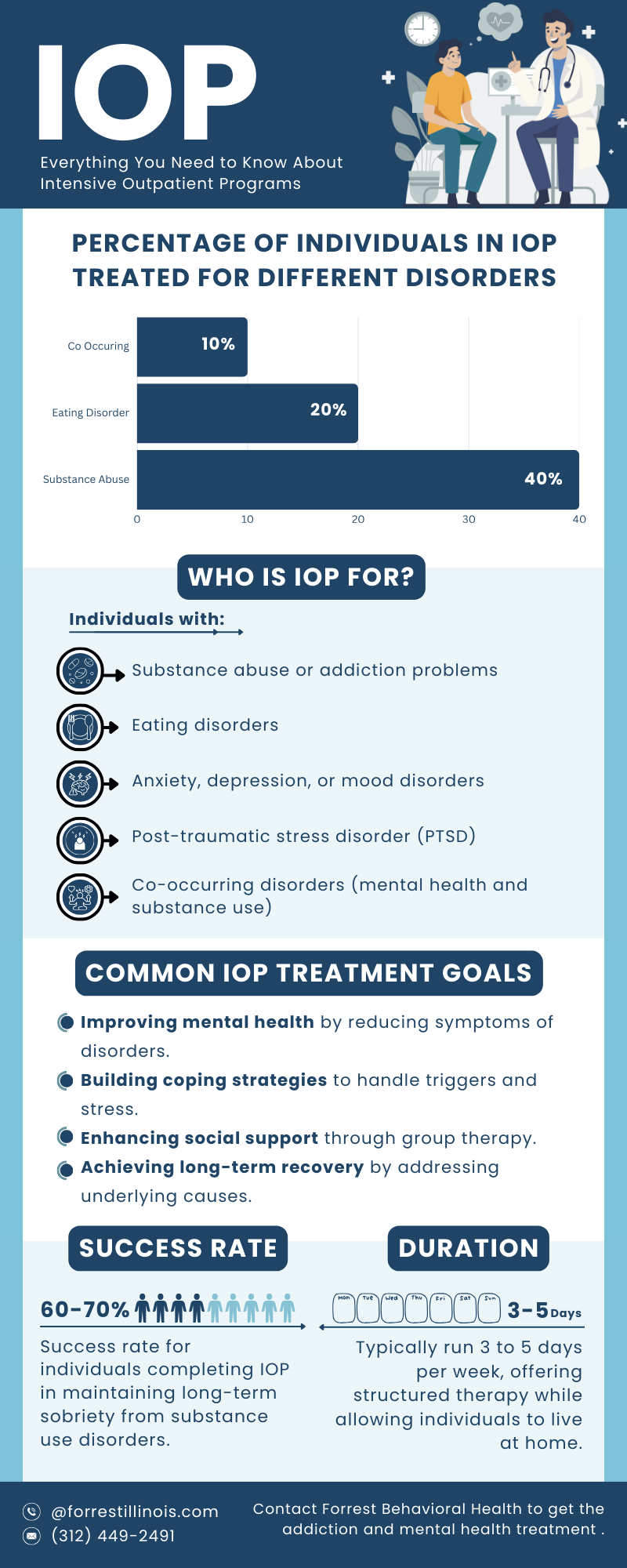
An Intensive Outpatient Program or IOP offers a balance between weekly therapy and full-time treatment. It is structured yet flexible, enabling you to receive support while managing your daily life.
But what does that really mean day to day?
At Forrest Behavioral Health, IOP Illinois is designed to help people stay connected to their lives while getting proper support.
Here are 10 things that actually happen in IOP and how they help you recover and stay on track.
1. You Show Up Consistently Even When You Don’t Feel Like It
One of the biggest differences with IOP is consistency. You attend multiple sessions each week, which creates a routine in your life. Some days you’ll feel motivated, other days you won’t!
But showing up anyway builds something important: reliability. And this consistency becomes important for your path to recovery.
2. You Talk About Real Situations, Not Just General Feelings
In IOP, conversations aren’t random. You’re not just talking about emotions in a general way. You’re talking about what actually happened yesterday, last night, or that morning.
This could include:
- A stressful interaction
- A moment where you felt triggered
- A situation you didn’t handle the way you wanted
This real-time reflection makes progress more practical.
3. You Start Noticing Patterns You Didn’t See Before
Many of our behaviors feel automatic at first. But with regular sessions, patterns start to become clear.
You begin to notice:
- What triggers stress or cravings
- How your reactions build over time
- Where things tend to shift emotionally
Awareness takes time to develop. It grows through practice, and IOP provides that practice.
4. You Learn Skills You Can Use the Same Day
One of the biggest benefits of IOP Illinois is the immediate, real-world application of what you learn in therapy.
You learn something in session, and then you go back into your day and try it.
This might mean:
- Handling a stressful conversation differently
- Managing anxious thoughts before they escalate
- Taking a pause instead of reacting
You’re not waiting weeks to apply what you learn; instead, you’re practicing it in real time.
5. You Stay Connected to Your Daily Life
Unlike inpatient care, IOP doesn’t remove you from your daily life.
You’re still:
- Going to work
- Managing responsibilities
- Interacting with people in your daily life
That can feel challenging at times, but it also makes progress more realistic. Why? Because you’re building new habits in the same environment where old ones existed.
6. You Hear From People Who Are Going Through Similar Things
Group sessions are a big part of IOP Illinois. At first, this can feel unfamiliar. But over time, it becomes one of the most helpful parts.
You start to realize:
- You’re not the only one dealing with this
- Other people are working through similar challenges
- Different perspectives can help you see things differently
This shared experience helps reduce feelings of loneliness, which is important for staying on track.
7. You Start Catching Things Earlier
Relapse and setbacks rarely happen all at once. They build over time.
With consistent support, you start noticing early signs:
- Changes in mood
- Increased stress
- Shifts in thinking patterns
Catching things early gives you time to adjust. This is one of the most practical ways IOP helps prevent bigger setbacks.
8. You Learn How to Handle Setbacks Without Giving Up
Not every day goes smoothly. There will be moments where things don’t go the way you planned.
IOP helps you understand that setbacks are part of the process, not the end of it.
Instead of stopping completely, you learn how to:
- Reflect on what happened
- Adjust your approach
- Keep moving forward
This mindset shift is what keeps progress going.
9. You Build a Routine That Feels Manageable
Structure does not mean being inflexible. IOP Illinois helps you create a routine that supports your life without making it too complicated.
This includes:
- Scheduled sessions
- Time for work or responsibilities
- Space for rest and recovery
Over time, this structure creates stability, and stability makes it easier to stay consistent.
10. You Start Feeling More in Control of Your Day
Many people notice that changes are often small rather than big. You start feeling like you have more control over how you respond to things.
Instead of reacting automatically, you pause, you think, and you choose.
This shift doesn’t happen all at once. But over time, it builds into something steady, and that’s what helps you stay on track.
IOP Illinois at Forrest Behavioral Health
At Forrest Behavioral Health, the Intensive Outpatient Program is designed for people who want to heal but want to continue living their everyday lives.
We want to help you change how you approach your life.
That’s why we offer support that includes:
- Structured therapy sessions throughout the week
- Practical skill-building
- Ongoing guidance and feedback
- A flexible approach that adjusts as you progress
Everyone’s experience is unique, but the main goal is the same: to build consistency, awareness, and stability.
A Final Step That Can Change Everything
Most people feel like things aren’t going the way they should, but they still wait until it gets worse to take action. However, you don’t have to be like that!
You should start looking for an outpatient rehab near me as soon as something feels off.
IOP Illinois helps you get started early with support and guidance that fits your life.
At Forrest Behavioral Health, our process is pretty simple. You just need to have a confidential conversation to help you understand your options, verify insurance, and see if IOP is the right fit for you.
Contact us today to start a journey toward a more stable, manageable, and controllable situation.