
Alcohol Rehab in Illinois (Complete Guide)
According to the Illinois Department of Public Health, more than 2,300 deaths between 2020 and 2023 were linked directly to chronic alcohol use. Another 2,000 deaths occurred indirectly from related issues such as high blood pressure, heart problems, and certain cancers.
In 2023, roughly 55.8% of adults, or about 5.15 million people, reported drinking alcohol. Binge drinking affected 18.1%, while heavy drinking hit 5.3%. Among teens, the 2021 Illinois Youth Survey found 22.8% of high schoolers had used alcohol in the past month. By 2024, Illinois teen drinking rates were nearly double the national average.
These numbers come from the state health department, the CDC, and SAMHSA. They show how deeply alcohol affects Illinois, especially through related crashes and lost lives. Yet the full story includes families that quietly break apart, jobs that slip away, and children carrying burdens they never asked for.
Many people wait and tell themselves it is not that bad, or they can quit on their own. However, without a proper alcohol rehab in Illinois, it is nearly impossible. What individuals actually need is a high-quality, judgment-free, specialized alcohol rehab in Illinois to help them overcome addiction.
Recognizing the Signs and Understanding the Effects
Key Warning Signs of Alcohol Use Disorder
Alcohol use disorder does not usually show up overnight; it creeps in slowly and engulfs the entire surrounding. The National Institute on Alcohol Abuse and Alcoholism lists clear signs that drinking has moved past just having a few.
You might find yourself drinking more or longer than you meant to, trying and failing to cut back, spending a lot of time getting alcohol or recovering from it, or dealing with strong cravings that will not let go. Maybe you are missing work or family stuff, or you keep drinking even when it is hurting your relationships or your health. Some people start dropping important activities or find themselves drinking in risky situations.
On the physical side, withdrawal can hit with tremors, sweating, nausea, or trouble sleeping. In tougher cases, it can become dangerous with hallucinations, seizures, or worse. The Mayo Clinic also points out rapid heartbeat, anxiety, and big mood swings when alcohol levels drop. If any of this sounds familiar, you are not alone, and it does not mean you are weak. It just means your brain and body need real support to reset.
Long-Term Health and Mental Health Consequences
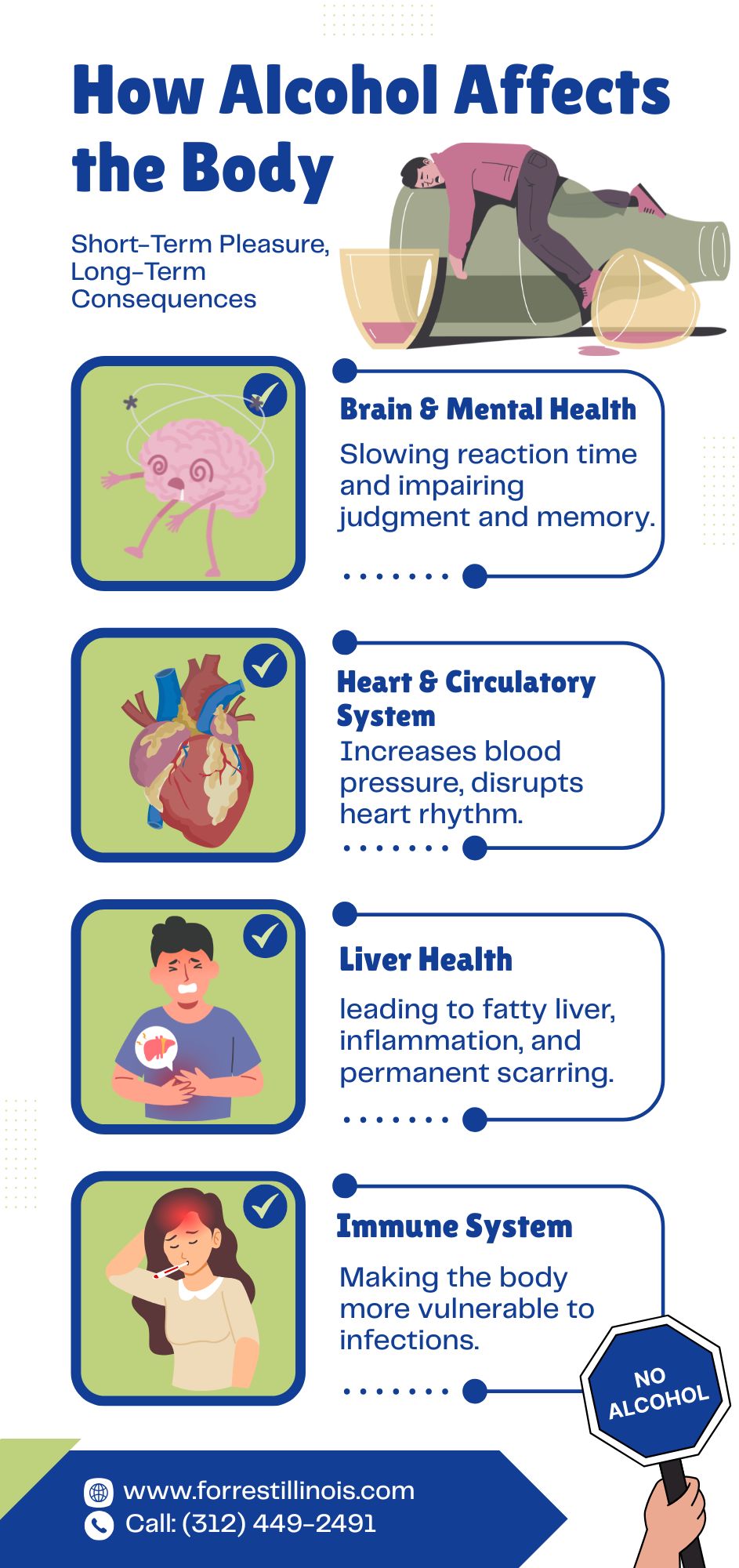
Over time, alcohol can touch almost every part of you.
It messes with how your brain talks to itself, which can leave you dealing with mood swings, memory fog, or trouble thinking clearly.
The liver takes a real beating with cirrhosis, sadly common.
Your heart and blood pressure can suffer, raising the odds of stroke or heart attack.
Your immune system weakens, making infections easier to catch, and cancer risks go up in several areas.
Co-Occurring Disorder:
Mental health often gets tangled in the mix too. Depression, anxiety, or past trauma can push someone toward drinking, and then drinking makes those feelings heavier.
The Illinois Department of Human Services Division of Substance Use Prevention and Recovery knows these dual diagnosis situations need care that treats both the alcohol use and the mental health piece at the same time. You do not have to figure it out alone.
The Solution: Effective Alcohol Rehab in Illinois
What you really require is an effective alcohol rehab in Illinois that can help you recover from your addiction. If you are a resident of Illinois and constantly searching for “alcohol treatment centers near me”, this is for you!!
Levels of Care Available
At Forrest Behavioral, for example, alcohol rehab in Illinois starts with an honest assessment. A licensed professional sits with you, looks at how serious the alcohol use is, any mental health pieces that need attention, and what your daily life actually looks like. From there, they help figure out the right level of care. The main options include:
- Medically supervised detox
- Inpatient or residential rehab
- Intensive outpatient programs
- Standard outpatient counseling
- Aftercare and sober living
Core Treatment Approaches
If your body is physically dependent, detox under medical watch is the safest way to begin. It keeps you comfortable and prevents serious complications. From there, most people move into the next phase of rehab.
Inpatient or residential programs at our alcohol rehab in Illinois give you 24-hour support in a calm, structured place away from old triggers. You focus on therapy, group work, and learning new skills while your mind and body heal. These are great when things feel overwhelming or when you need that full-time focus.
Outpatient programs let you keep living your real life, going to work, school, or handling family stuff, while still getting solid care. Intensive outpatient usually means at least nine hours a week of treatment. Standard outpatient is a little lighter but still powerful.
Medication Assisted Treatment
Medication-assisted treatment at this alcohol rehab in Illinois can be a game-changer too.
Certain approved meds ease cravings and make staying sober easier when they are paired with counseling. The CDC and NIAAA fully back this approach as part of a bigger plan.
Evidence-Based Care:
Therapy is the heart of it all. Cognitive behavioral therapy helps you spot triggers and build better ways to handle stress.
Group sessions remind you that you are not alone. Family counseling mends relationships and strengthens the support waiting for you at home.
And trauma-informed care digs into the root stuff for a lot of people.
Aftercare and Relapse Prevention:
Aftercare keeps the progress going. Sober living homes, alumni groups, and continued outpatient sessions help you stay steady.
Peer support, whether through 12-step or other recovery communities, gives you accountability and people who truly get it.
Taking the First Step Toward Recovery
Alcohol addiction does not get the final say on who you are. It is a treatable condition, and real help is closer than it feels right now. That first call or visit can feel scary, but it is also the moment things start turning around.
If you or someone you care about is struggling with alcohol, reach out today. A quick conversation with a recovery specialist can clear up the next steps and take some of the weight off your shoulders. Forrest Behavioral Health is ready to walk with you through personalized care that is built for lasting change. Call (312) 449-2491 and talk to someone who understands.