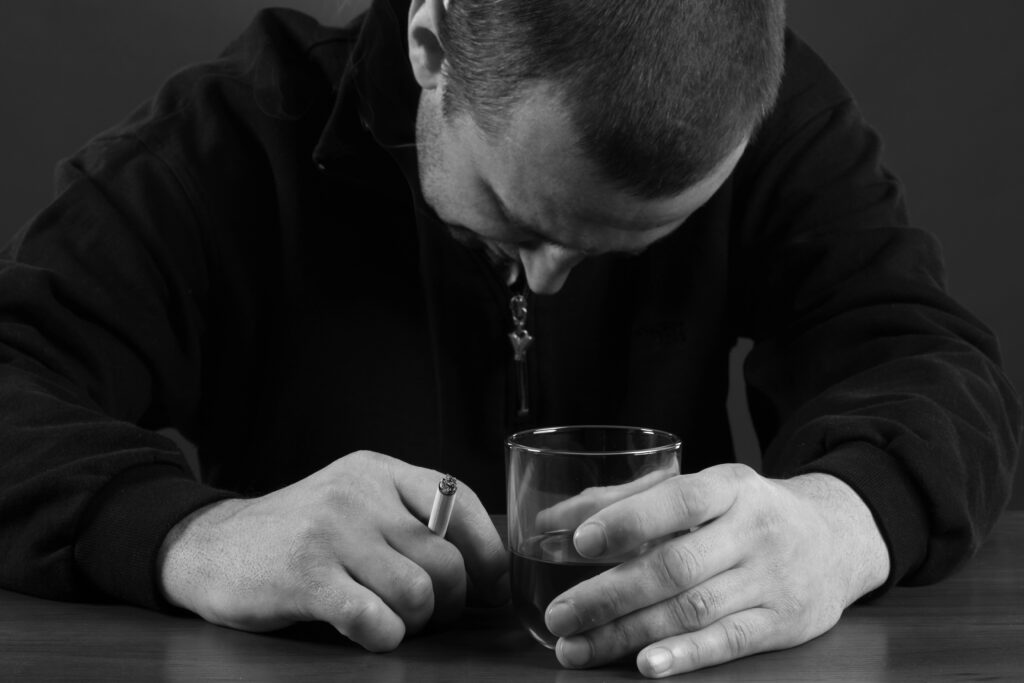

7 Signs You Need Dual Diagnosis Rehab Illinois: Jason’s Co-Occurring Disorder Treatment
Jason was 30, working a steady job as a customer support representative. From the outside, everything looked fine. He showed up, handled his responsibilities, and kept things together.
But behind that, something felt off.
He knew he had a drinking problem, and his focus was simple: get his drinking under control. What he didn’t fully notice was the anxiety that had been there all along.
Drinking helped for a while, until it didn’t.
When he tried to cut back on alcohol, his anxiety only got worse. That’s when things started to make sense.
Jason wasn’t dealing with just one issue, and that realization is what led him to Forrest Behavioral Health. After an initial assessment, we recommended that he get into dual diagnosis rehab Illinois.
What Is Dual Diagnosis And Why Does It Matter?
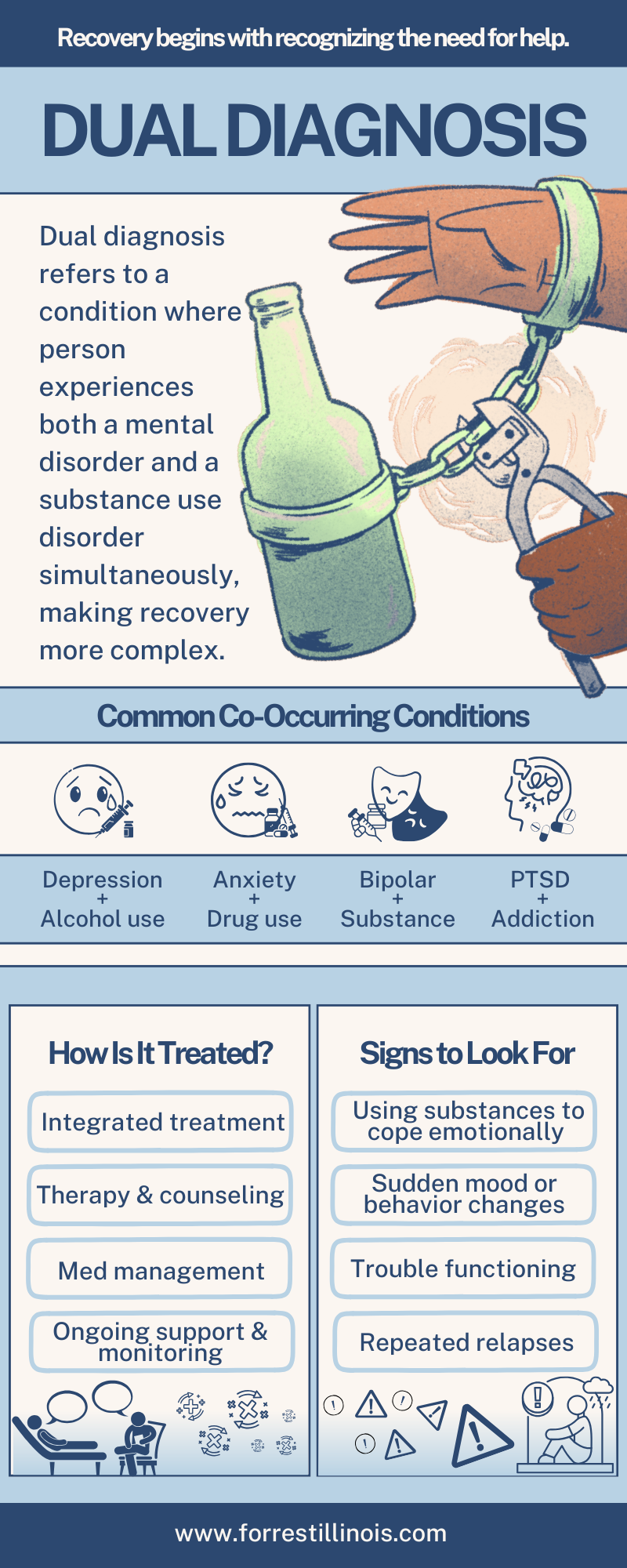
Dual diagnosis means dealing with both:
- A mental health condition, like anxiety, depression, or trauma
- And substance use at the same time
This is more common than people realize.
According to the National Center for Biotechnology Information (NCBI), nearly 9.2 million adults in the U.S. experience co-occurring disorders each year.
That’s a big reason why co-occurring disorder treatment exists, because treating just one side usually doesn’t work.
Here are 7 signs that mental health and substance use may be connected, as seen in Jason’s story.
1. You Use Substances to Manage How You Feel
At first, drinking helped Jason relax.
After work, it took the edge off. It helped him sleep and quieted his thoughts. But over time, it became less of a choice and more of a routine.
When substances start feeling like the only way to manage emotions, it’s often a sign that something deeper is going on, not just the habit itself.
2. Things Get Worse When You Try to Stop
Jason tried cutting back more than once. But every time he did, his anxiety came back stronger.
He felt restless, overwhelmed, and unable to focus.
This is one of the clearest signs of a dual diagnosis!
If stopping substance use makes mental health symptoms worse, both issues need to be addressed together, not separately.
3. You Feel Off Even When You’re Functioning
From the outside, Jason seemed fine. He was working, socializing, and keeping up with responsibilities.
But internally, he didn’t feel quite all right.
When we asked him to explain his feelings, he described them as constantly being on edge, like something was always slightly wrong.
Many people with both a mental health issue and a substance use problem feel a gap between how they appear on the outside and what they struggle with inside. This disconnect is common among those who need dual diagnosis rehab Illinois.
4. You Keep Going Back to the Same Patterns
Jason didn’t plan to rely on alcohol, but the pattern kept repeating:
- Stress lead to drinking
- He felt temporary relief
- Anxiety returned
- He drank again
Over time, this cycle became automatic.
When patterns repeat like this despite efforts to change, it’s important to understand what’s driving the behavior underneath.
5. You’ve Tried to Fix It on Your Own And It Hasn’t Worked
Jason tried different approaches:
- Cutting back gradually
- Taking breaks
- Distracting himself with work
It helped for a small time, but nothing lasted.
This is where many people get stuck, thinking they just haven’t tried hard enough.
In reality, treating only one side of the problem often leads to short-term progress followed by setbacks.
6. Your Mental Health and Substance Use Feel Connected
Eventually, Jason started noticing the link.
When his anxiety increased, his drinking increased. And when he drank more, his anxiety worsened the next day.
It was not two separate problems; it was one cycle that fed into itself!
This is what co-occurring disorder treatment is meant to do: it helps separate the two issues from each other.
7. You’re Tired of Managing It Alone
This was the turning point. It was not a crisis moment, nor something dramatic. It was just exhaustion.
Jason realized he was constantly trying to manage something that wasn’t improving.
That’s when he reached out to us at Forrest Behavioral Health.
What Changed With Dual Diagnosis Treatment?
At Forrest Behavioral Health, Jason didn’t just focus on stopping drinking; he started understanding his anxiety.
Our treatment included:
- Therapy focused on both mental health and substance use
- Learning how to manage anxious thoughts without relying on alcohol
- Recognizing triggers earlier
- Building routines that reduced stress overall
Instead of treating symptoms separately, everything was addressed together in dual-diagnosis treatment.
That made the difference!
Why Does Treating Both Conditions Together Work?
When only substance use is treated, mental health symptoms often remain. When only mental health is treated, substance use can continue as a coping tool.
Dual diagnosis rehab Illinois brings both into the same treatment plan.
This creates:
- Better long-term stability
- Fewer relapses
- More practical coping strategies
Co-Occurring Disorder Treatment at Forrest Behavioral Health
At Forrest Behavioral Health, we focus on treating dual diagnosis based on real-life situations, not just labels.
That means:
- Understanding how mental health and substance use interact
- Creating a personalized treatment plan
- Offering structured programs like PHP and IOP
- Adjusting treatment as progress happens
The goal is not to find quick fixes. It is to help people create lasting changes that continue after treatment.
A Final Thought: It’s Not Just One Problem
If you’ve been trying to figure out what’s going on, just like Jason, and nothing seems to make sense, it might not be one issue.
It might be 2 things connected in a way that’s hard to separate on your own. That’s what dual diagnosis is!
And it’s more common than people think!
If you or someone you know is struggling, reach out to us today to start a conversation about dual diagnosis rehab Illinois.
Let’s explore how we can support you on the path to recovery.