
Oak Park Behavioral Health: Outpatient Anxiety and Depression Treatment
Powering through life with poor mental health could make you struggle 10x more than someone with optimal health. For example, tasks that are simple and small for others seem monumental for you, and you’re often overwhelmed.
As a result, you can’t do your 100% managing work, home, and important relationships, which only adds more pressure. Therefore, carrying on with a declining mental state must never be an option, and you must get it treated.
Luckily, with models like outpatient anxiety and depression treatment in Oak Park, you can start this journey without pausing your whole life. This guide sheds more light on how outpatient treatment can fix your life; keep reading to find the easier way out.
What Can Anxiety and Depression Do to Your Life
Anxiety is not feeling nervous and overwhelmed before something big. Instead, it’s your nervous system staying on high alert even when nothing big/dangerous/important is actually happening. For example, when someone has an anxiety disorder, their body reacts to a work email the same way it might react to a threatening situation. This person’s level of fear perception is maximized, and they can’t relax.
Likewise, depression pulls the energy out of everything, so tasks that used to take you five minutes start to feel like climbing a hill. Your ability to feel joy or be energetic slowly diminishes, and almost nothing makes you happy.
Now, imagine if these two issues show up together; that will be double the trouble for the patient. Anxiety and depression will likely feed off each other and worsen the situation. For example, the exhaustion from depression might make anxious thoughts harder to manage. On the other hand, the constant tension from anxiety will further decrease the motivation that depression already took away.
Sadly, KFF data shows that 28.7% of adults in Illinois report experiencing symptoms of anxiety and depressive disorders. And among those battling these challenges, around 28.2% reported not receiving therapy or care despite needing it. Needless to say, this is not a small gap, and a lot of people are white-knuckling their way through these struggles.
How Does Outpatient Anxiety and Depression Treatment Help
Many people delay mental health treatment because of the level of commitment it requires. However, with outpatient anxiety and depression treatment, you get structured care without committing all your energy to it. You can manage work and household responsibilities just fine, all while working through these struggles.
Here’s how outpatient treatment lends a helping hand without disrupting your life:
No Isolation
As mentioned earlier, many assume that getting mental health treatment means having to blow up everything else. They fear they might have to miss work, explain their absence to the kids, and lose income they can’t afford to lose.
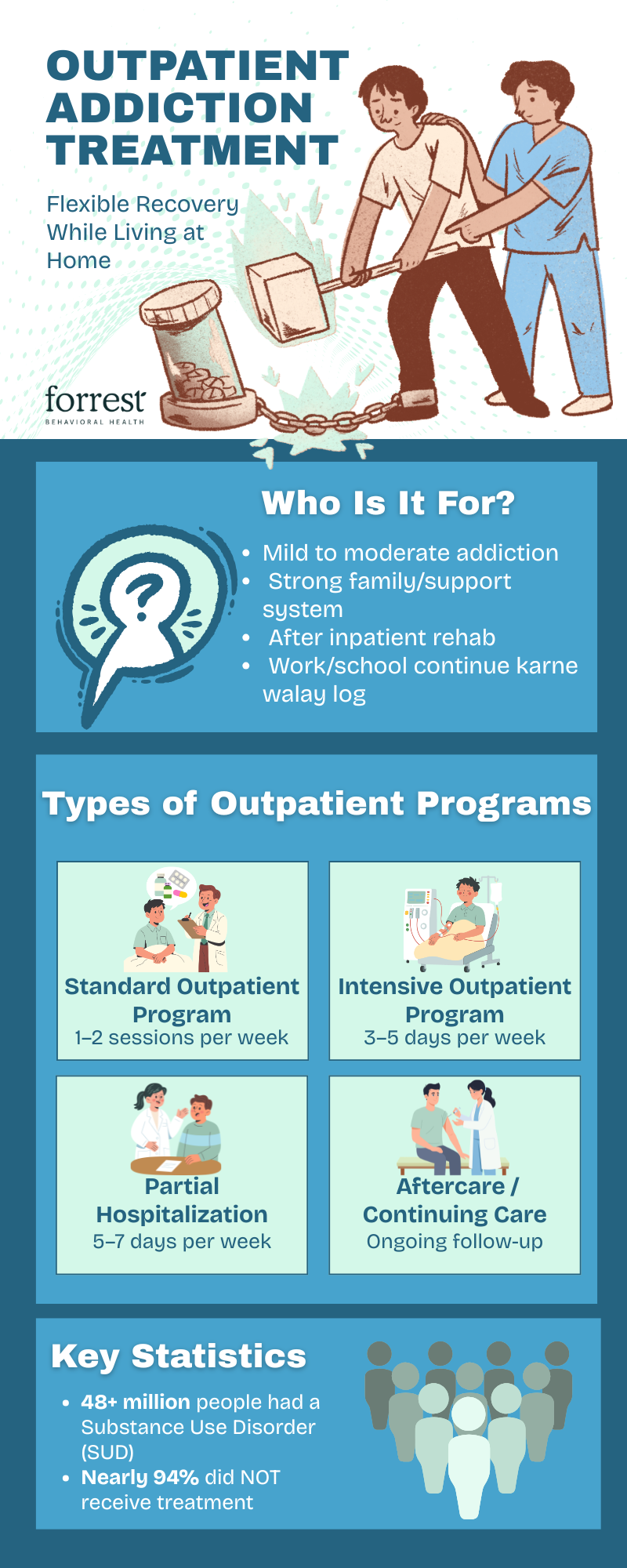
Surely, all these are genuine fears, and we need a practical way around them. Hence, an outpatient treatment schedule ensures you don’t feel isolated or cut off from anything important. Since you visit the treatment center 3-5 times a week during this module, you have sufficient time for other responsibilities. Also, those well-planned therapy sessions don’t drain your energy and even help you be more present afterwards.
Empathetic Environment
When your outpatient treatment starts, a clinician thoroughly evaluates your current situation so the sessions that follow cater to your biggest challenges. For instance, if your anxiety started after a specific loss and now you can’t ever let your guard down because you fear something will go wrong, the counseling efforts will work around it. Experts will help ensure your irrational fears don’t disrupt your potential and your ability to feel joy.
Or, if your depressive symptoms have been building up for quite some time, your conversation with the expert will help shape the plan of action. Since a generic treatment plan doesn’t work, the experienced team at Forrest Behavioral Health ensures you get a plan built around your circumstances.
Take Back Control Through Therapy
Anxiety convinces you the danger is everywhere, and depression makes you think that nothing you do matters. Therefore, cognitive behavioral therapy goes after both lies directly and brings you back to reality. It teaches you to catch the thought as it happens and test whether it’s true.
Sure, this process is slow, but it sticks because you’re not just managing symptoms for an hour a week. Instead, you build a skill you carry into every hard moment for the rest of your life. That’s the part people don’t expect: the relief isn’t just emotional. It’s practical. You genuinely get better at handling your mind.
Group Therapy Breaks the Isolation
When you’re sitting across from people dealing with the same racing thoughts or the same fog, without having to explain anything, you feel connected. Since over 28% of adults in the state experience serious mental health conditions, the person next to you in the group has likely felt what you’re describing. That kind of recognition can do what individual therapy can’t always reach, and it’s often where people start to feel less alone.
Consistency Makes the Progress Stick
During outpatient anxiety and depression treatment, showing up regularly moves the needle. For instance, if you attend a couple of sessions a week or more, your progress builds gradually instead of through a restrictive 3-month program. Such a schedule helps you handle difficult moments as they happen instead of waiting for a crisis.
Slow and Steady Wins the Race
Outpatient anxiety and depression treatment might feel slow, but it brings gradual improvement in your condition. If you want to work through these challenges without feeling isolated or restricted, Forrest Behavioral Health offers both intensive outpatient and standard outpatient models. Depending on your improvement, treatment intensity goes up and down. So don’t let this get any worse; let’s discuss and get you out of this!