
Signs You May Need Dual Diagnosis Treatment in St. Charles or Geneva
Most people don’t suddenly hit rock bottom! What happens instead is quieter and easier to ignore.
The anxiety that once came and went is now always there. The drink that helped you unwind becomes a daily night routine. A substance, medication, or habit shifts from something you use to rely on. Life keeps moving on the outside, work, family, routines, but inside, things feel heavier and harder to manage.
This is often the point where people in the Fox Valley start looking for answers, not because everything has fallen apart, but because they don’t want it to.
In this guide, we have discussed some signs that point towards getting dual diagnosis treatment in St. Charles or Geneva. Treatment centers like Forrest BH have dual diagnosis plans that treat both mental health and substance use.
What Is Dual Diagnosis?
Dual diagnosis means someone is experiencing both a mental health condition and a substance use disorder at the same time.
Examples include:
- Anxiety and alcohol use
- Depression and prescription misuse
- Trauma and drug use
- Bipolar disorder and substance dependence
Treating only one issue usually doesn’t work. When mental health is ignored, substance use often returns and vice versa.
That’s why integrated, dual diagnosis care matters!
Why Dual Diagnosis Matters in the Fox Valley?
According to the National Alliance on Mental Illness (NAMI), around 17 million people with a mental illness also experience a substance use disorder.
In Illinois and suburban areas like the Fox Valley, this issue is even more prevalent. Many people face challenges like stress, long commutes, isolation, and limited access to coordinated care.
These issues make it difficult for individuals to get the help they need. Often, they switch from one therapist, doctor, or program to another without finding care that really meets their needs.
9 Signs You Need to Go For Dual Diagnosis Treatment
Not every person who drinks, uses substances, or struggles with mental health needs dual diagnosis care. But patterns matter!
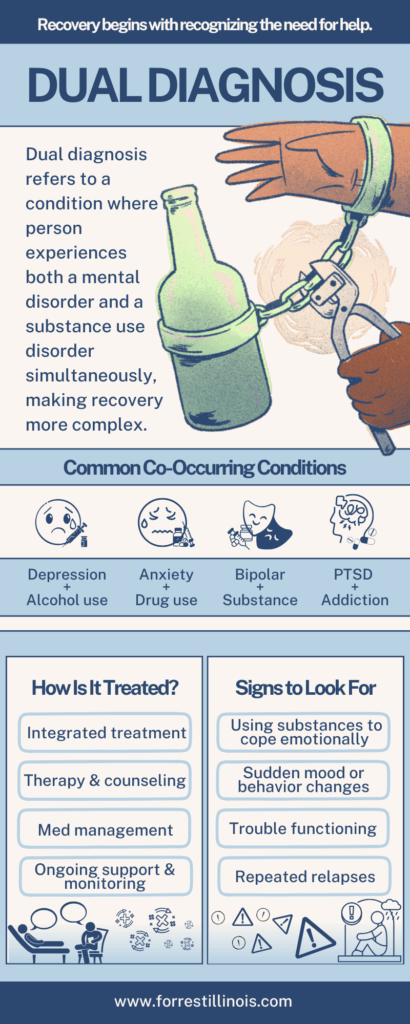
If several of the signs below feel familiar, it may be time to consider integrated treatment.
1. You Manage Mental Health Symptoms with Substances
If you are using alcohol, drugs, or medications to calm anxiety, lift mood, sleep, or numb emotions, substance use and mental health are already linked.
2. Mental Health Symptoms Get Worse When You Try to Stop
When you cut back or stop using substances, and your anxiety gets worse, your depression deepens, or your mood swings increase, you need to treat both issues together.
3. You’ve Tried Therapy or Rehab Before, But It Didn’t Stick
When treatment only addresses mental health or substance use, people often relapse and feel frustrated. Dual diagnosis care helps solve this issue.
4. Stress or Emotional Triggers Lead Directly to Use
If certain emotions, situations, or thoughts regularly lead to substance use, it strongly suggests that mental health issues are influencing your behavior.
5. You Feel Stuck in the Same Cycle
When you show improvement and then experience setbacks, it often means there is a connection between their emotional health and substance use that hasn’t been addressed.
6. Medications and Substances Are Interacting
If you are using alcohol or drugs while taking psychiatric medications, it can worsen symptoms, reduce effectiveness, and increase risk.
7. You Feel Functional but Internally Overwhelmed
Many people, including professionals and caregivers, seem stable on the outside but may be struggling inside. Dual diagnosis treatment focuses on what is happening beneath the surface.
8. Substance Use Increased After a Mental Health Change
Major life events, trauma, grief, or new diagnoses often lead to increased substance use as a coping strategy.
9. Shame or Confusion Is Preventing You From Asking for Help
If you’re unsure what the problem is, mental health, substance use, or both, this uncertainty itself is a sign that you need dual diagnosis support.
Why Treating Both Together Makes a Difference?
Mental health and substance use influence each other every day. Treating them separately can feel like taking one step forward and two steps back.
Dual diagnosis treatment in St. Charles and Geneva focuses on:
- Understanding how symptoms interact
- Reducing relapse risk
- Improving emotional regulation
- Building sustainable coping strategies
How Forrest BH Supports Dual Diagnosis Care in St. Charles and Geneva?
Forrest BH offers dual diagnosis treatment for individuals across the Fox Valley, including St. Charles and Geneva.
Here’s what you can expect:
Comprehensive Dual Diagnosis Assessment
The treatment begins with a full assessment of mental health symptoms, substance use patterns, medications, and life stressors.
Integrated Mental Health and Substance Use Treatment
Rather than separating care, we treat mental health and substance use together through coordinated therapy and support.
Outpatient Dual Diagnosis Programs
We also offer outpatient programs, so that the clients can receive structured treatment while continuing their daily lives.
Individual Therapy
In one-on-one sessions, our licensed therapists help you understand your emotions, identify what triggers you, and develop coping strategies.
Relapse Prevention and Skill Development
Clients learn how to manage stress, cravings, mood shifts, and high-risk situations with practical tools.
Ongoing Care Planning
We don’t leave you after the treatment ends. We also offer support later to help clients maintain progress.
You Don’t Need a Diagnosis to Start Care
Many people hesitate to reach out because they are unsure whether they need dual diagnosis care.
However, we encourage you to contact us if:
- You feel overwhelmed but unsure why
- You’ve tried help before without lasting results
- You just want clarity, not commitment
Dual Diagnosis Treatment in St. Charles and Geneva Is Just a Call Away
If you’re in St. Charles, Geneva, or anywhere in the Fox Valley and experience one or more of these signs, Forrest BH offers dual diagnosis care designed for real life. No judgment, and no one-size-fits-all solution!
Talk with us today, even if you’re unsure what kind of help you need.
The conversation alone can bring clarity, direction, and relief. No pressure, just understanding!