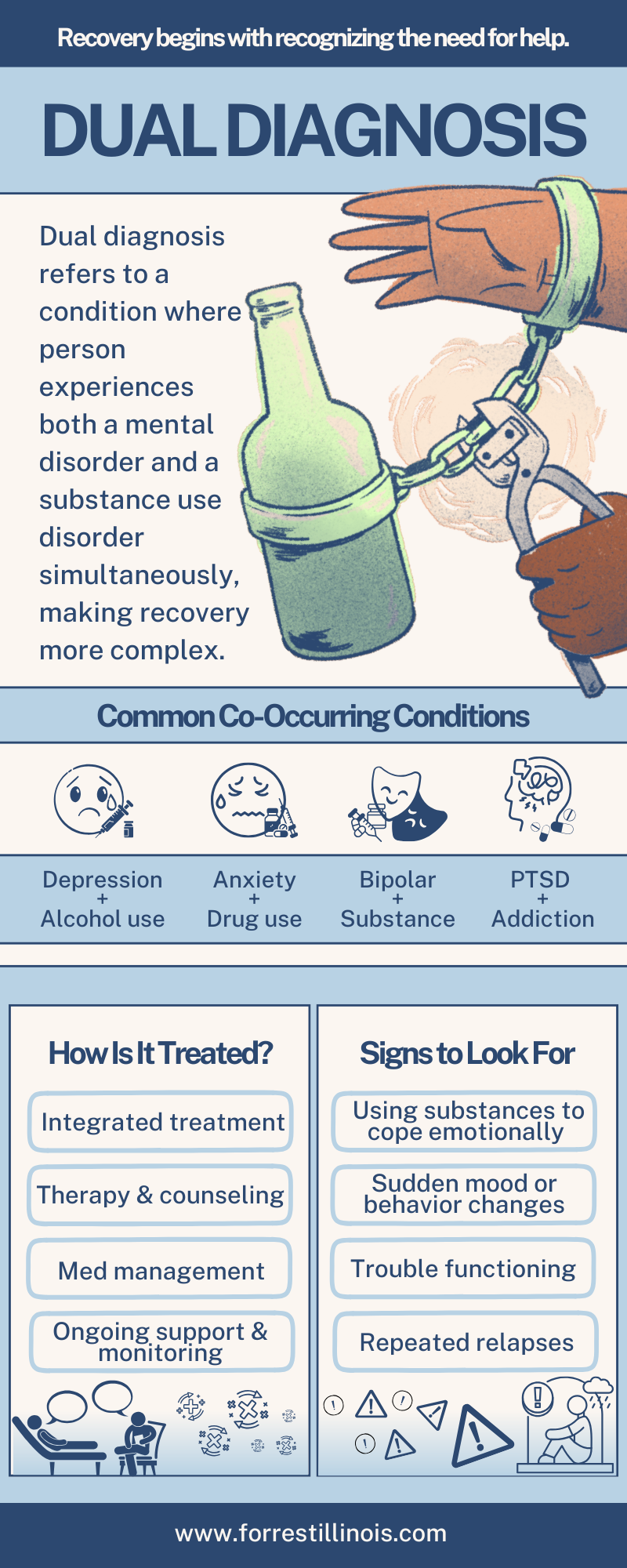
Why Did He Choose a Dual Diagnosis IOP?
Inpatient treatment felt unnecessary and could not be taken because of Alex’s work schedule. On the other hand, weekly therapy just wasn’t enough!
What Alex needed was more structure, while he kept working. That’s why an Intensive Outpatient Program (IOP) made sense.
It offered:
Forrest BH helped assess Alex’s needs and confirmed that a dual diagnosis intensive outpatient program was just what he needed.
Week 1 at Forrest BH: Assessment and Stabilization
The first week at Forrest BH focused on understanding, not fixing everything at once.
Alex met with our care team to:
- Review mental health symptoms
- Discuss substance use openly, without judgment
- Identify stressors and triggers
- Set realistic short-term goals
For the first time, Alex talked about anxiety and alcohol use together. This alone felt relieving. The message from Forrest BH was clear: this is not about blame, and it is not about being perfect.
Week 2: Seeing the Pattern Clearly
In week two, our licensed therapist helped Alex connect the dots. Through individual therapy and group sessions, Alex began to see how:
- Work stress increased anxiety
- Anxiety increased the urge to drink
- Drinking temporarily reduced anxiety, but made it worse the next day
Rather than separating mental health work from recovery work, we treated them as part of the same cycle.
Week 3: Learning Skills That Work Outside the Building
In the third week, we focused on practical coping, a core part of Forrest BH’s IOP approach.
Alex learned:
- How to manage anxiety without substances
- How to tolerate discomfort instead of escaping it
- How to handle high-stress moments at work
These tools were practical and could be used right away. Forrest BH focused on skills that people can apply during their commute, after a tough meeting, or at night when anxiety tends to rise.
Week 4: Handling Urges With Support, Not Panic
During week four, Alex experienced a stressful work situation that triggered strong urges to drink. Instead of hiding it or feeling like progress was lost, Alex brought it into treatment.
For us, this moment became part of the work:
- What triggered the urge?
- How did anxiety show up physically?
- What helped interrupt the cycle?
This is where Forrest BH’s dual diagnosis model came into action. We addressed mental health and substance use together, without judgment or fear-based responses.
Week 5: Rebuilding Routine With Confidence
By week five, Alex started noticing real changes. Anxiety was still present, but it no longer felt overwhelming. And alcohol no longer felt like the only option.
Forrest BH helped Alex:
- Build healthier daily routines
- Improve sleep consistency
- Reconnect with supportive relationships
- Strengthen confidence in coping skills
Progress wasn’t about eliminating stress; it was about responding differently when stress showed up.
Week 6: Planning for Life After Forrest BH’s IOP
The final phase of the Forrest BH IOP focused on sustainability.
Alex worked with our team to:
- Plan ongoing care
- Identify future high-risk situations
- Decide what support would continue after IOP
What This Case Shows About the Chicago Dual Diagnosis IOP Program at Forrest BH?
Alex’s experience shows how Forrest BH goes about dual diagnosis care in Chicago:
- Mental health and substance use are treated together
- Care is structured but realistic
- Progress includes setbacks without shame
- Skills are designed for real life, not just sessions
This approach helps people heal without stepping away from their lives.
Is a Dual Diagnosis IOP Right for You?
Your story doesn’t have to be exactly like Alex’s story. If you think your mental health struggles are linked to substance use, consider looking into integrated care.
You must understand that going for a dual diagnosis IOP program, you don’t need a label, and you don’t need to be at rock bottom.
A Chicago Dual Diagnosis IOP Program Built Around Real Life
If you’re searching for a Chicago Dual Diagnosis IOP Program, Forrest BH is your go-to treatment centre! With structured care, an understanding team, and no judgment, we care for people whose mental health and substance use are connected.
Contact Forrest BH to talk through what’s going on. Let us help you understand your options and decide what support actually fits your life.