
Mental Illness Awareness Week: How to Start Outpatient Treatment in Chicago This Fall
The signs of declining mental health are usually small and easy to overlook. You might feel anxious, have trouble sleeping, feel low, or struggle to manage everyday responsibilities. You think it’s just a phase that will pass. But if these symptoms don’t go away, it may be more than a phase, and you may need help.
If you’re looking to get op mental health treatment, Mental Illness Awareness Week is a good time to learn about it and explore your treatment options. Held during the first week of October, this event helps people understand mental illness and feel more comfortable asking for help.
Mental health concerns are also more common than many people realize. According to the National Institute of Mental Health, an estimated 23.1% of U.S. adults, or 59.3 million people, live with a mental illness.
You don’t have to wait until things get worse to get help. Outpatient mental health treatment in Chicago can help you feel better while you continue living at home.
What Is Outpatient Mental Health Treatment?
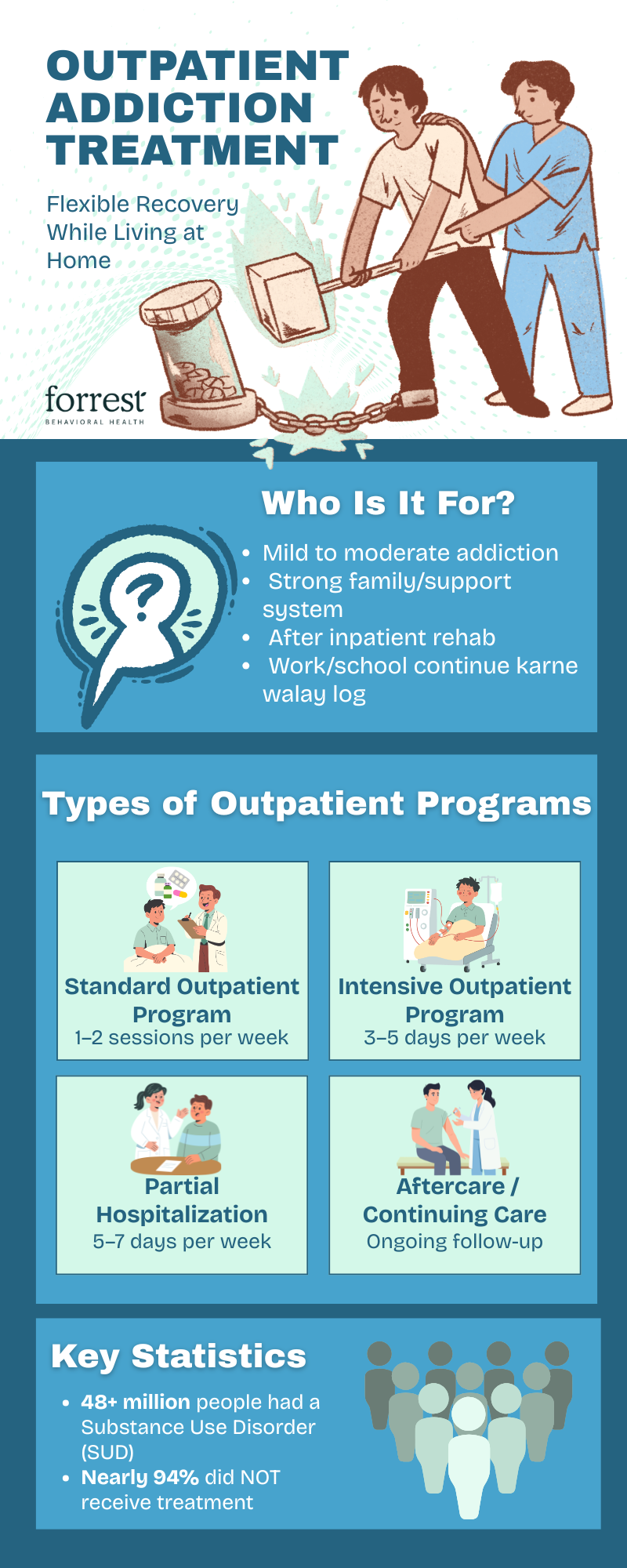
Outpatient mental health treatment lets you get professional help without staying overnight at a facility. You attend therapy sessions or appointments and then go home.
Depending on your needs and the provider’s services, outpatient treatment may include:
- Individual Therapy: Meet one-on-one with a therapist to discuss your thoughts, feelings, and concerns.
- Group Therapy: Learn coping skills and connect with others facing similar challenges.
- Intensive Outpatient Programs (IOP): Attend treatment several times a week while continuing to live at home.
- Day Treatment: Receive more structured support during the day without staying overnight.
- Medication Management: Meet with a qualified provider to discuss whether medication may help manage your symptoms.
The right treatment depends on your symptoms, daily responsibilities, support system, and the amount of care you need.
Signs You Need Outpatient Mental Health Treatment
Everyone has difficult days. However, when emotional struggles continue or begin to interfere with daily life, it’s time to reach out for professional support.
You should go for an assessment if you experience one or more of the following for a prolonged period of time:
- Feel anxious, sad, or overwhelmed most days.
- Have trouble sleeping or concentrating.
- Find it difficult to manage work, school, or family responsibilities.
- Notice changes in your mood, energy, or behavior.
- Struggle with relationships because of your mental health.
- Feel like your usual ways of handling stress are no longer helping.
How to Start OP Mental Health Treatment in Chicago?
Going for treatment can feel scary at first, especially if you’ve never spoken with a mental health professional before. However, taking one step at a time can make the process easier.
1. Identify What You Need Help With
Start by thinking about what’s been bothering you. Maybe you’ve been feeling anxious, struggling with low mood, dealing with stress, or finding it hard to manage your emotions.
You don’t need to know exactly what is wrong before you ask for help. Just telling a provider what you’ve noticed can give them a good starting point.
It might help to write down your symptoms, when they started, and how they affect your daily life.
2. Find a Mental Health Provider
Look for mental health treatment options in Chicago and nearby areas. Check what services they offer, their qualifications, treatment methods, and location.
Make sure the provider addresses your specific concerns and provides the support you need.
3. Check Your Insurance Coverage
Cost is an important factor when starting treatment. Before you make an appointment, check with your insurance company or ask the provider to verify your insurance.
Find out if your plan covers the program you’re considering, if the provider is in-network, and if you will have any deductible, copay, or coinsurance to pay.
If you don’t have insurance, ask about payment options before making a decision.
4. Schedule an Initial Assessment
An initial assessment helps your provider understand your mental health needs. They may ask about your symptoms, medical history, daily routine, past treatment, and personal goals.
Be as open as you feel comfortable. The more your provider knows about your situation, the easier it will be to discuss the right treatment options.
5. Follow Your Treatment Plan
After your assessment, your provider will recommend a treatment plan based on your needs. This can be individual therapy, group sessions, a more structured outpatient program, or other services.
How to Fit Treatment Into Your Fall Routine?
Starting treatment doesn’t mean you have to put your entire life on hold. Outpatient care is designed to provide support while you continue to live at home and go about your everyday life.
Here are a few ways to make treatment easier to manage:
- Plan your Schedule: Look for appointment times that work around your job, school, or family responsibilities.
- Make Time for Yourself: Leave room for rest and activities that help you manage stress.
- Set Small Goals: Focus on manageable changes rather than expecting everything to improve at once.
- Stay Consistent: Attend appointments and practice the skills you learn between sessions.
- Ask for Support: If you feel comfortable, let someone you trust know that you’re working on your mental health.
OP Mental Health Treatment at Forrest Behavioral Health
Mental Illness Awareness Week is a reminder that mental health deserves attention and care. If anxiety, low mood, stress, or other concerns are affecting your daily life, you don’t have to wait to reach a breaking point. Reach out for help today!
If you’re looking for outpatient mental health treatment in the Chicago area, Forrest Behavioral Health can help you explore your options. Reach out to learn more about available programs and take the first step toward getting the support you need.
You can call us, send an email, or visit us to learn more about our programs and explore the available options.
Read Next: Domestic Violence Awareness Month: Trauma-Informed Outpatient Care in Aurora, IL