
Domestic Violence Awareness Month: Trauma and PTSD Treatment in Aurora, IL
The impact of domestic violence is not limited to the time of the relationship. Survivors may experience anxiety, sleep issues, fear, and/or troubling thoughts or memories.
These experiences can impact relationships, employment, and life. Some people may experience post-traumatic stress disorder (PTSD).
October is Domestic Violence Awareness Month. It’s a time for acknowledging survivors and asking others to get help without judgment.
In Aurora, Illinois, Trauma and PTSD treatment can help you heal, feel safe, and emotionally stabilized.
Understanding the Connection Between Domestic Violence, Trauma, and PTSD
Domestic violence can involve physical abuse, threats, sexual abuse, financial control, or emotional abuse. If you are in fear, you will react to stress that lasts beyond the actual stress.
The CDC’s intimate partner violence data shows that during the past 12 months, an estimated 6.7 million women and 2.8 million men had contact sexual violence, physical violence, or stalking by an intimate partner.
It’s estimated that 43.5 million women and 20.7 million men have been victims of one or more of these forms of intimate partner violence in their lifetime.
Trauma responses vary. Some survivors are constantly on guard, others are emotionally numb, feeling guilt for their actions, or may not be able to trust people.
These reactions can happen following traumatic or extended events.
PTSD may occur following exposure to a traumatic event, but not all individuals who are victims of domestic violence will develop PTSD.
Only a trained mental health professional can evaluate the signs and symptoms and suggest treatment.
Recognizing Trauma and PTSD Symptoms after Domestic Violence
It can be difficult for survivors to be able to move forward and rebuild their lives without being aware of the way that abuse continues to impact them.
Common trauma-related symptoms are:
- Intrusive memories, nightmares, or disturbing reminders.
- Uneasiness: Always feeling alert, anxious, or easily startled.
- Staying away from anyone and/or any situation that reminds you of the abuse.
- Trouble with sleep, focus, and mood.
- Losing touch with others or lack of trust in others.
- Feeling shame, guilt, or self-blame.
According to the National Institute of Mental Health (NIMH), approximately half of U.S. adults will have at least one traumatic experience in their lifetime.
According to the NIMH, out of all U.S. adults, 3.6% of adults in the U.S. suffered from PTSD during the past year (survey data 2001–2003).
This is an older estimate that does not specifically refer to domestic violence survivors.
When symptoms last or become a problem in living, professional help is available. There’s no need to wait until you are overwhelmed to go for treatment.
How Trauma-Informed Outpatient Care Supports PTSD Recovery
Trauma-informed care acknowledges the impact of trauma on emotional health. It emphasizes safety, respect, working together, and individual freedom.
This method can make therapy more manageable for those who have been victims of domestic violence.
Treatment may start with the current concerns and coping strategies and not ask someone to discuss painful experiences until they are ready.
Treatment can involve the following:
- Emotional Regulation: Regulating anxiety and overwhelming emotions.
- Grounding techniques: Attention to the present if feeling upset.
- Cognitive behavioral therapy (CBT): Challenging negative thinking patterns and replacing them with more positive thoughts.
- Involving a trained clinician in trauma-focused therapy to treat symptoms of trauma.
- Safety and boundary planning: Recognizing supportive relationships and actions to maintain safety and health.
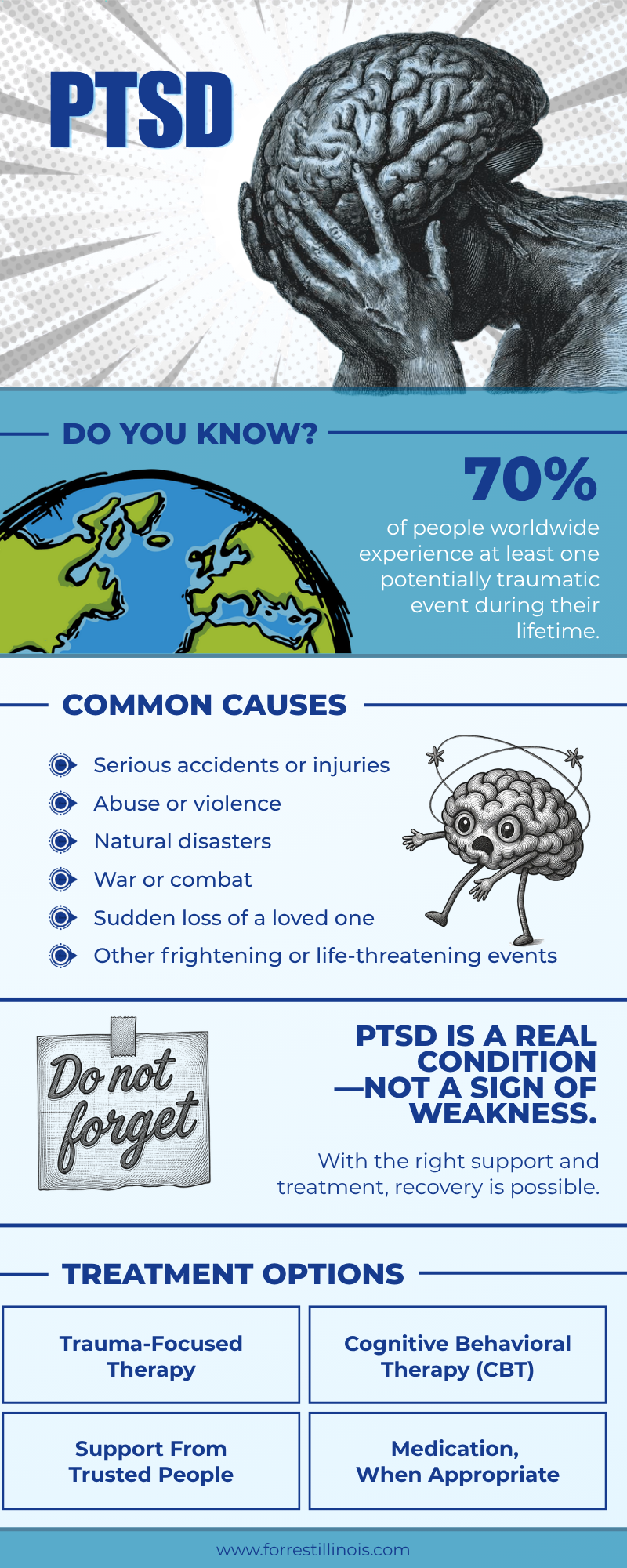
There are no standard treatments for PTSD. An evidence-based approach can be recommended based on the individual’s situation by a qualified professional.
Outpatient treatment might be appropriate for individuals who can manage to stay at home during their treatment sessions.
It can also help them to maintain family responsibilities, employment, and education.
Treatment intensity should be tailored to the needs of the person, and safety issues should be addressed first.
Building Self-confidence After Domestic Abuse
Recovering confidence, setting boundaries, and trusting personal decisions are also on the recovery path. Survivors also might take time to regain confidence, set boundaries, and make decisions for themselves.
It’s possible that trauma can cause you to feel like your life is out of control, particularly if you feel you have been controlled or intimidated for a long time.
Through therapy, survivors can learn to identify their strengths as well as to overcome self-blame and learn healthy responses to stress.
A positive relationship may also play a significant role in rehabilitation.
Giving trauma and PTSD survivors the correct treatment can help them slowly begin to feel in control.
It will take time to get there, but every step is important in making progress toward safety and emotional wellness.
Finding Trauma and PTSD Support in Aurora, IL
Local support is helpful in facilitating treatment into daily living.
Aurora residents can use the streets of Route 31 and Galena Boulevard for travel to get to work, appointments, and errands.
The city of Aurora is known for its local attractions, like the Paramount Theatre, Leland Tower, and Fox River.
The healing process doesn’t always happen in a strict timeframe, however. One conversation or appointment with a trusted professional may be a starting point to progress.
When seeking mental health care, inquire about a provider’s knowledge and experience treating trauma, PTSD, and domestic violence. You can also request privacy, scheduling, and treatment methods.
Take the First Step Toward Healing
Domestic violence can affect a person’s sense of safety even if they are not currently being abused. Survivors can learn to cope, build trust, and establish a more sustainable future with the proper support.
If trauma or PTSD symptoms affect your daily life, consider speaking with a qualified mental health professional. Forrest Illinois provides behavioral health services for those who are seeking help.
Check out the treatment options offered at Forrest Illinois and see if their programs are right for you.
Healing is personal, and seeking help is a meaningful step to reclaiming one’s life.
Read Next: Alcohol Use Disorder in Working Professionals: Confidential Evening IOP in Chicago