

MDMA (Ecstasy) Addiction Treatment Illinois
The ecstasy scene around Chicago is shifting. Taking MDMA might start as a fun way to connect at a summer music festival. Before long, that casual weekend habit can turn into a heavy psychological reliance. The Centers for Disease Control and Prevention continues to track an ongoing surge in synthetic stimulant emergencies across the Midwest.
A surprising number of people still think ecstasy is not addictive. It might not cause the severe physical sickness associated with opioid withdrawal. But the emotional crash creates a brutal cycle that keeps people coming back for more. You need more than just a few days of rest at home to truly recover. Forrest Behavioral Health offers specialized dual diagnosis care right off Higgins Road to help you safely rebuild your natural brain chemistry.
The Neurochemical Reality of MDMA Dependency
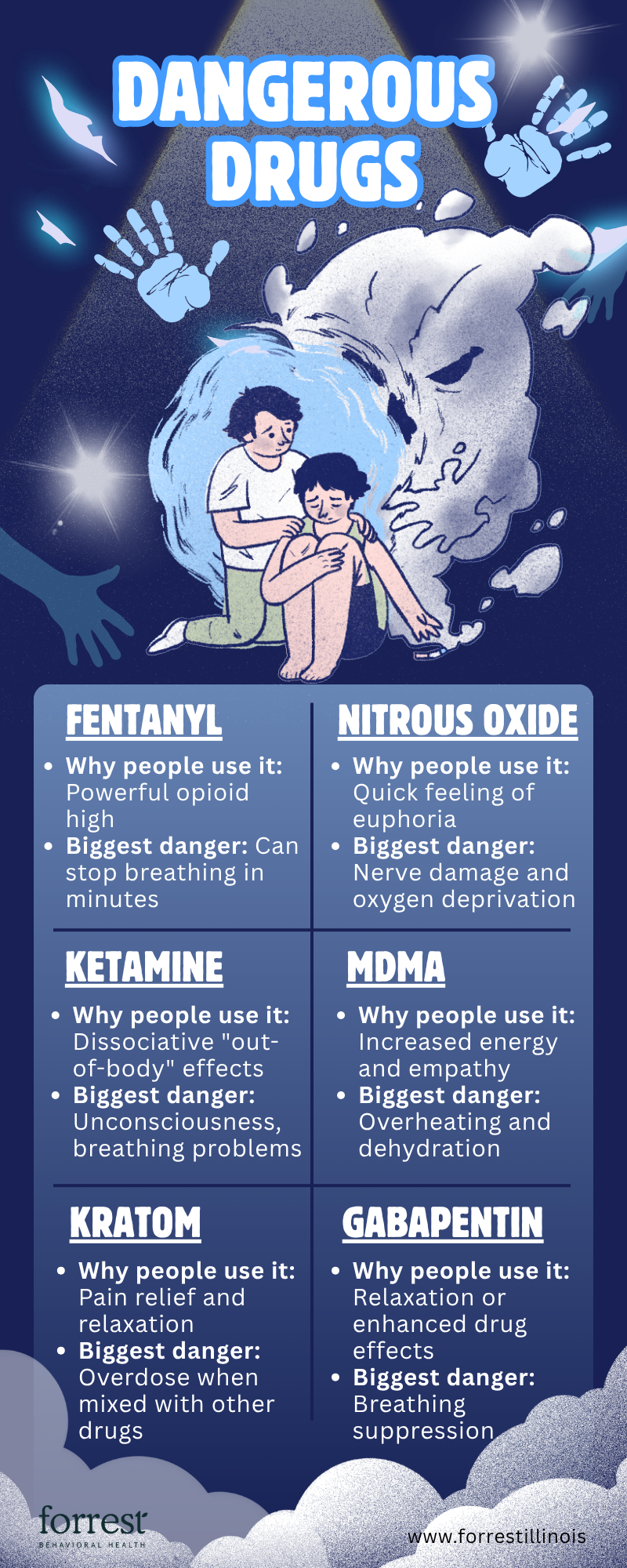
MDMA changes how your brain processes everyday joy. The substance forces your nervous system to dump all its stored serotonin and dopamine at once. Flooding those receptors creates that famous wave of euphoria and social closeness.
The problem comes the following week. Your brain’s natural feel-good reserves are totally empty once the high wears off. Living with that chemical deficit brings on crippling anxiety, dark depression, and wild mood swings.
The Psychological Trap of Self-Medication
Dealing with the days following an ecstasy binge is incredibly draining. Young professionals frequently use the substance to hide their social anxiety or escape chronic work stress. They lean on the drug just to feel confident around their peers.
Emptying your serotonin reserves actually intensifies those original mental health struggles. You end up feeling emotionally numb and physically exhausted. Taking the drug again feels like the only way to lift the heavy cognitive fog and function normally.
Breaking the Loop
Occasional festival use can quickly become a serious daily problem. Your brain forgets how to regulate basic moods without a synthetic boost. You find yourself stuck riding a rollercoaster of artificial peaks and deep psychological valleys.
Getting out of this pattern alone is incredibly tough. Chronic use often leads to severe memory fog and a total lack of motivation. Repairing that damaged reward circuitry requires targeted clinical help.
Why Standard Detox Programs Fall Short
Many families assume a quick visit to a local hospital detox will fix everything. Standard clinics are built to handle acute physical emergencies like alcohol tremors. Their main goal is keeping someone physically stable for about three days.
Ecstasy dependency looks very different from traditional addiction. The withdrawal phase involves severe emotional swings rather than sweating or shaking. A standard medical hold ignores the deep psychological toll of the drug.
The Danger of Ignoring the Psychological Impact
Just waiting for the substance to leave your bloodstream is not enough. Sending someone home while their serotonin levels are tapped out is a recipe for immediate relapse. The resulting depression is just too heavy to carry alone.
Standard rehab models often miss the underlying emotional pain that started the whole cycle. That untreated social anxiety or past trauma remains a major threat. The person goes home without any new coping skills to protect themselves.
The Necessity of Integrated Psychiatric Care
Real recovery takes a smart and integrated psychiatric approach. We have to actively rehabilitate the brain’s reward system over a longer period. Treating the chemical habit and the mental health struggle at the exact same time is crucial.
Our clinicians use proven methods like Cognitive Behavioral Therapy to address the root causes of your distress. We teach your brain how to process difficult emotions without relying on synthetic chemicals. That comprehensive strategy builds a reliable base for lasting psychological balance.
The Forrest Behavioral Health Standard Along the I-90 Corridor
Trying to get sober inside a massive public hospital can be a nightmare. Typical psychiatric wards are loud and chaotic spaces. Patients often feel like just another file folder moving down an assembly line.
Forrest Behavioral Health does things differently. We designed our Hoffman Estates setting to be a dignified clinical sanctuary. Our private environment exists specifically to promote deep neurological healing.
A Discreet Sanctuary in Hoffman Estates
Our campus sits far away from the stressful noise of downtown Chicago. That calm atmosphere helps lower your cortisol levels so your nervous system can actually relax. Feeling physically and emotionally safe is a prerequisite for unpacking heavy behavioral health issues.
We value privacy above almost everything else. Yet our location is incredibly easy to reach from Schaumburg, Barrington, and anywhere along the Northwest Tollway. Getting top-tier care should never require battling stressful city traffic.
Clinical Efficiency and Sophisticated Care
Our clinical model respects your intelligence and your valuable time. We skip the frustrating red tape found in state-run healthcare systems. Our team provides focused psychiatric care and intensive individualized therapy.
We use Dialectical Behavior Therapy to help clients build better distress tolerance. Clinicians work closely with you to safely restore your natural neurochemical baseline. We help high-achieving people reclaim their lives with dignity and respect.
Extending Reach Through Virtual IOP
Putting your career and daily life on hold is not always realistic. We want to remove those common barriers to getting good clinical care. Our comprehensive Virtual Intensive Outpatient Program brings specialized support right to your living room.
This advanced telehealth option bridges the gap between structured therapy and your everyday duties. We deliver our elite programming to people statewide across Illinois. You can get expert help while actively maintaining your professional life.
Take the Next Step Toward Restoring Your Baseline
You have the power to break this exhausting cycle of neurochemical depletion today. You can choose a path of sophisticated and evidence-based healing. You do not have to navigate this heavy emotional crash alone. Please contact our clinical admissions team right now for a highly confidential consultation. We will ensure a rapid and private transition into our premier care environment without any unnecessary delays.
Reach out to Forrest Behavioral Health by calling (312) 449-2491. You can also explore our advanced clinical methodologies at forrestillinois.com. We proudly serve the Chicago suburbs and offer expert therapeutic care statewide via our Virtual IOP.