

Could a Mental Health Day Program Be the Support You’ve Been Looking For?
Sometimes weekly therapy is not sufficient, but inpatient treatment is too demanding. That’s where a mental health day program can be particularly helpful.
There are many adults in Illinois struggling with anxiety, depression, trauma, or burnout who are also working, having families, and living life.
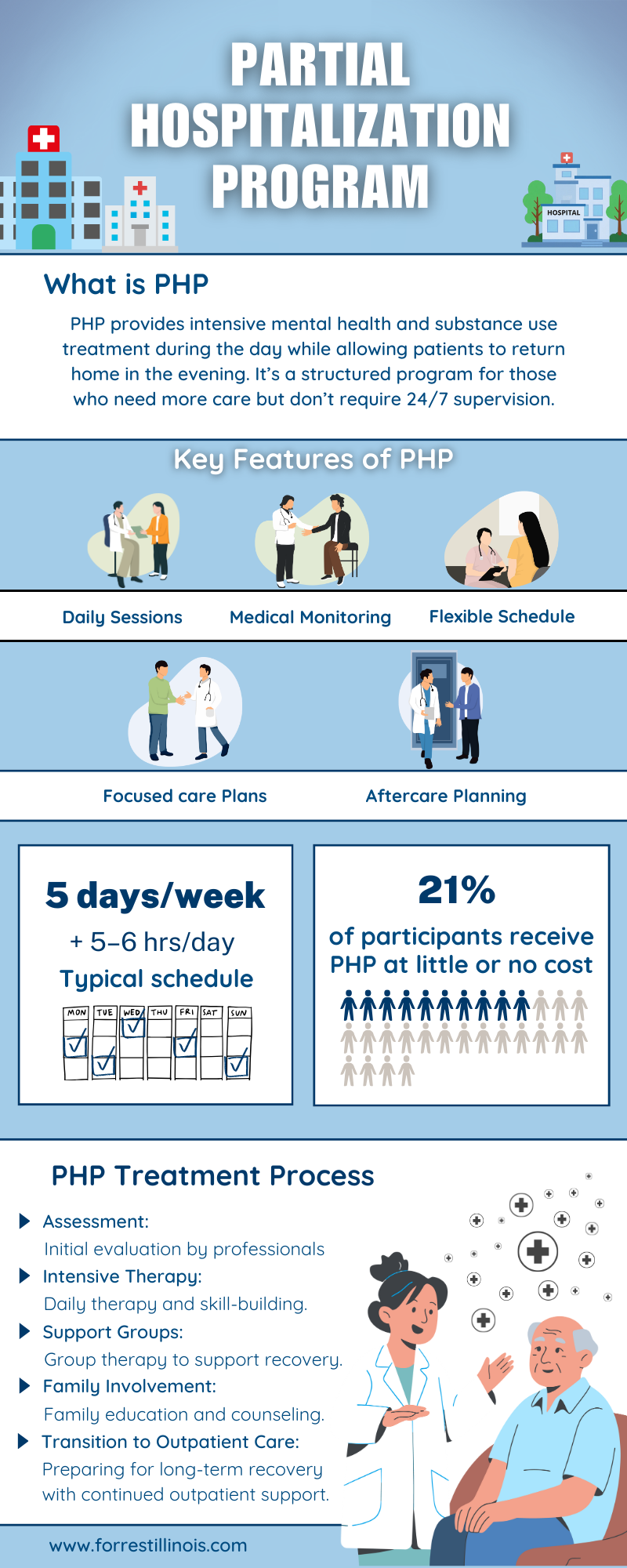
A mental health day program provides a day-long structure and support and then sends you home in the evening.
This balance is seen as a more realistic and sustainable treatment.
What is a Mental Health Day Program?
Some facilities in Illinois also provide mental health day programs, also known as Partial Hospitalization Programs (PHPs).
It offers intensive care and support, without overnight accommodation.
Generally, patients come in for a few hours of treatment in the day and then go home.
Programs often include:
- Individual therapy
- Group therapy
- Medication management
- Life skills support
- Stress management and coping skills
This type of care is more comprehensive than weekly counselling but less intensive than an inpatient stay in the hospital.
Why Many Adults Need More Than Weekly Therapy
Weekly therapy may be beneficial, but in some cases, more frequent support is needed.
For example:
- Anxiety or panic attacks that are so strong that they interfere with functioning
- Major depression
- Trauma-related symptoms
- Emotional burnout
- Problems with functioning at work or at home
Symptoms can seem more overwhelming in Illinois, where the pace of life is faster.
Stress from commuting long hours on the CTA, busy schedules close to downtown Chicago, and a lot of work pressure can aggravate emotional fatigue.
A day program provides an opportunity to focus on recovery without giving up daily activities.
The Prevalence of Mental Health Problems
Millions of adults suffer from mental health problems each year.
Studies indicate that approximately 1 in 5 people in the U.S. will have a mental illness during their lifetime.
According to another study, the prevalence of anxiety disorders in adults is approximately 19% per year.
Those numbers reflect that it is not uncommon to require additional support. It is a common healthcare need, similar to that of physical health conditions.
What A Typical Day Program Looks Like In Illinois
All programs are unique, but most have a daily routine. Here are some of the activities that might happen in a typical day:
Check-in in the morning and group therapy
Patients start the day with a conversation about goals, challenges, and emotional well-being.
Individual counseling sessions
Therapists offer individual, personalized assistance and treatment to address personal needs and treatment objectives.
Skills workshops
These sessions are about coping, stress management, communication, and mindfulness.
Medication management
Psychiatric providers review medications, adjust medication as necessary, and monitor progress.
Afternoon therapy groups
Patients are involved in supportive discussions and therapeutic activities prior to return to home.
This can help create a sense of normalcy, emotional regulation, and coping skills.
Why Day Programs are Effective for Illinois Adults
Many adults want treatment, but they are not able to drop out of work, school, or family responsibilities altogether.
A day program provides flexibility, with intense care.
Help might be needed to support the daily activities of a person living close to Millennium Park or of someone who commutes through Union Station.
Patients can also practice coping skills in real-life situations right at home each evening.
Day programs work for many adults because of structure and independence.
The Need for Structured Mental Health Support
Intensive outpatient and partial hospitalization programs have been found to be effective in reducing the symptoms of depression and anxiety.
A review reported that structured day treatment programs result in significant decreases in psychiatric symptoms as well as functioning in daily life.
These programs are effective for many reasons, but most of all, they are consistent.
Regular therapy sessions build momentum and keep patients in the treatment process.
Signs a Mental Health Day Program May Be Right for You
A day program may be right for you when:
- The weekly therapy treatment is no longer enough
- Symptoms include problems in work or relationship areas
- You require additional assistance rather than an inpatient facility
- You feel emotionally overwhelmed most days
- You wish to have structured treatment at home
The programs will be structured to offer more support, but not exclude you from mainstream life.
How Forrest Illinois Supports Mental Health Recovery
At Forrest Illinois, mental health day programs are intended for adults in Illinois who need a structured, caring, and practical day program.
Forrest Illinois can accompany you in your journey towards mental health recovery as you:
- Resolve anxiety & depression
- Develop more positive coping mechanisms
- Improve emotional regulation
- Carry on with daily activities while recovering
- Establish lasting stability and wellbeing
The aim of this is not merely to relieve symptoms but to make people feel better and re-establish confidence, balance, and quality of life.
Lifestyle and the Need for Balance in Illinois
Time flies in Illinois.
From busy work routines, frequent duties, and long commutes, many adults seem to be feeling exhausted before they realize that they require assistance.
During times of stress or burnout, even the areas of relaxation, such as Navy Pier or Lincoln Park, can be overwhelming.
A mental health day program is a special day with a specific focus on recovery, reflection, and skills development in the middle of the day.
Make The First Step Towards Structured Support
Requiring more support doesn’t mean that you’ve failed. It implies that your mind and body need a more robust recovery plan.
A mental health day program offers structure, guidance, and consistency that may not be available from weekly therapy sessions.
At Forrest Illinois, adults can receive care that is both compassionate and appropriate to their daily realities and struggles.
If you are feeling stressed out, depressed, traumatized, or burnt out, then you may need to consider a mental health day program now.
With the right support, you may feel more stable, focused, and hopeful again.