
Panic Attacks vs. Anxiety Disorder: Finding the Right Treatment in Evanston, IL
Imagine taking a stroll down Sheridan Road in Evanston when your heart begins to race. Your chest is tight, your hands are shaking, and you are having trouble breathing. Once the symptoms pass, you’re still worried about when they will return.
To some, it is a panic attack. Others feel anxious all the time and find their daily duties overwhelming.
Both can impact sleep, relationships, work, and quality of life.
It is important to differentiate between panic attacks and anxiety disorders, so Evanston residents can receive the right treatment.
How Common Are Panic Attacks And Anxiety Disorders?
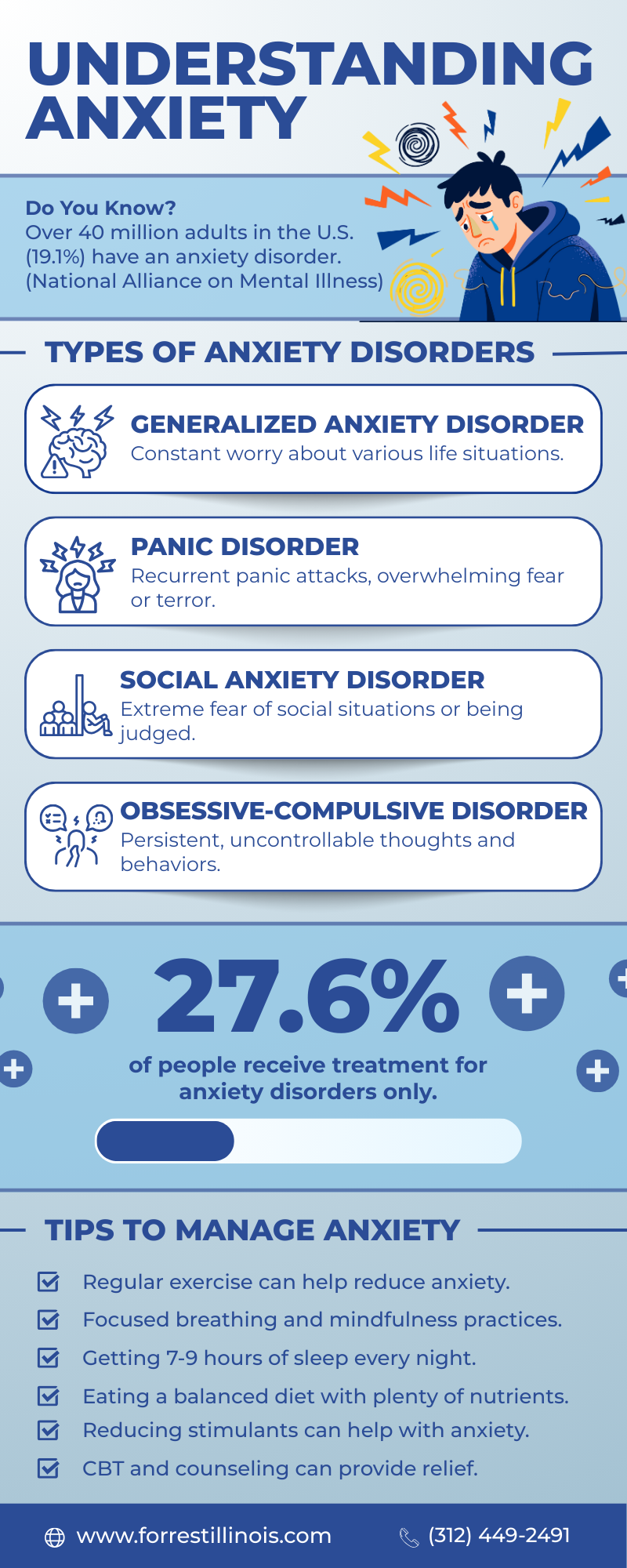
The NIMH estimates that 19.1% of U.S. adults will have an anxiety disorder in a year.
Panic disorder is rare.
According to a national survey conducted in 2001-2003, NIMH estimates that 2.7% of U.S. adults had been diagnosed with panic disorder at least once a year.
About 4.7% reported having it in their lifetime.
These national figures show just how prevalent anxiety disorders are, but not everyone experiences the same symptoms and has the same treatment requirements.
How Panic Attacks Differ From Anxiety Disorders
A panic attack is a sudden, intense fear or discomfort.
Anxiety disorders are characterized by ongoing worry and/or fear that disrupts normal functioning.
Understanding Panic Attacks
Panic attacks may occur at any time, even when there is no danger. Symptoms are frequently at their worst within minutes.
Common symptoms include:
- Increased heart rate or chest pain
- Shortness of breath
- Sweats, shakes, or chills
- Dizziness or nausea
- Fear of loss of control or death
A student at Northwestern, for instance, might get panicky before a test, on the way to or from a class, or just as he is crossing the university’s campus.
Having a panic attack doesn’t necessarily indicate that you suffer from panic disorder.
If the episode is repeated several times, and there is still a fear that it will happen again, then a professional assessment may be warranted.
Understanding Anxiety Disorders
Anxiety disorders are characterized by worry that may be hard to manage.
You may constantly think of the worst-case scenario, not be able to relax, or feel stressed for no particular reason.
A person who lives close to downtown Evanston may be concerned about work deadlines, rent, or family responsibilities for some time, causing a decrease in sleep and concentration.
Generalized Anxiety Disorder, Social Anxiety Disorder, and Panic Disorder are all unique disorders that need to be assessed individually.
The American Psychological Association (APA) provides an understanding of how anxiety disorders can impact daily life.
When Should You Seek Professional Treatment?
Talk to a mental health professional if you:
- Have frequent panic attacks or worry about having more.
- Have an inability to manage ongoing concern.
- Fear attending social gatherings, work, or classes.
- Have sleep problems and/or problems with focus.
- Are always stressed and/or preoccupied.
- Use alcohol or other substances to deal with distress.
Don’t delay getting help until symptoms are severe!
If chest pain is new or severe, you faint, or you get very short of breath, it’s important to see a doctor ASAP.
Avoid assuming that these symptoms are anxiety.
Finding the Right Anxiety Treatment in Evanston, IL
Treatment will vary depending on symptoms, severity, and impact on life.
A professional evaluation can assist in determining a solution.
Cognitive Behavioral Therapy (CBT)
Cognitive behavioral therapy (CBT) is a therapy that assists individuals in identifying unnecessary thought patterns and finding more positive ways of dealing with distress.
For instance, if a person has a racing heart rate, they may instantly think there is something terrible going on.
CBT can help them explore these thoughts and regulate anxiety sensations.
Gradual exposure to feared situations may also be a part of treatment for panic symptoms.
Medication Management
Some people can benefit from medication to control their persistent anxiety and/or recurrent panic attacks.
Depending upon the diagnosis, a health care provider may prescribe antidepressants or other medications that might be helpful.
A trained prescriber can talk to you about the pros and cons, and what options are available if you have any medical history.
Do not alter or discontinue medications without talking to your provider.
Outpatient and Intensive Outpatient Programs
Some people may require only therapy once a week.
Others require more regular assistance and support when symptoms are affecting their ability to work, study, or relate to others.
Intensive outpatient programs (IOP) provide structured treatment and then return home.
Services can consist of individual therapy, group therapy, coping skills, and/or medication management.
An IOP can offer extra support to Evanston residents who have other responsibilities, such as college, work, or family, and does not necessitate a stay overnight.
Mental Health Support for Evanston Residents
It can be difficult to find treatment when you are already feeling stressed.
Look for a licensed mental health professional experienced in treating panic attacks and anxiety disorders.
Think about insurance, travel, appointments, and type of care.
Evanston residents might also have to juggle schedules for appointments, commuting, school, and family.
An easy-to-access treatment option can help make it easier to attend treatment regularly.
Forrest Behavioral Health has mental health facilities in Illinois and provides mental health treatment for anxiety disorders in Illinois.
Its location in Hoffman Estates is outside Evanston, but could be an option for those who need care in the greater Chicago area.
Call the team and make sure they have the services you need, that you are eligible, that you have insurance coverage, and that the location is right for you.
Take the First Step toward Managing Anxiety
Panic attacks may cause you to worry about how your body reacts to the attacks; chronic anxiety can make it overwhelming to perform daily tasks.
That’s not a personal failure; that’s something that needs to be dealt with.
You can become familiar with triggers and learn how to manage your distressing thoughts and deal with everyday situations more confidently with expert help.
Please call Forrest Behavioral Health if anxiety/panic symptoms are interfering with your life and you need help with mental health treatment options in Illinois.
Don’t delay getting help because anxiety is a problem in your everyday life.
Making the first step can help move forward with more confidence.
Also Read: Panic Attacks vs. Anxiety Disorder: Finding the Right Treatment in Evanston, IL