

What to Expect During Your First IOP Session in Illinois (Step-by-Step Guide)
To be honest, the idea of starting an Intensive Outpatient Program can be stressful before you’ve even walked through the door.
People usually think of awkward, emotional, or silent conversations with strangers. Many Illinois adults don’t seek early help because they are nervous.
The first IOP, however, is typically very calm and supportive.
The idea is to not overwhelm you. But the aim is to make you feel safe enough to start recovery.
Why A Lot Of People Delay Starting An IOP?
There are many adults who wait months before even seeking mental health treatment.
There is a concern of judgment for some. Others are concerned with missing work or losing their privacy.
Studies indicate that over 50% of the adult mentally ill population does not receive any treatment at all.
Anxiety, depression, or emotional burnout can be even more difficult to deal with in the future due to this delay.
That’s why it’s important to know what happens in the first session.
Step 1: Arriving and Completing Paperwork for Intake
At the beginning of your first session, you’ll be asked to sign paperwork and get acquainted with the group.
Staff members may ask for:
- Insurance information
- Emergency contacts
- Medical history
- Mental health background
This process can help to develop an individualized treatment plan. Staff take patients on a guided tour at many Illinois programs.
Overall, the setting is more welcoming than clinical.
Step 2: Meeting Your Care Team
Upon completion of the paperwork, you will probably have to meet with therapists or clinical personnel.
This discussion is about gaining insight into your current difficulties and aspirations.
You don’t need to give all the information at once. In fact, the majority of patients feel like they’ve found relief after this initial discussion.
Emotional support in the early stages of treatment has been demonstrated to have a significant impact on treatment engagement.
The early relationship helps patients to reduce feeling isolated.
Step 3: Understanding the Daily Program Structure
IOPs follow a structured schedule to create consistency and stability.
Your health care team will describe:
- Therapy schedules
- Group session expectations
- Break times
- Program rules and privacy guidelines
It might sound intimidating at first, but structure can ultimately help to ease stress.
When you know what is going to follow, this can help calm your emotional state.
Step 4: Your First Group Therapy Session
This is generally the scariest part. Many people have visions of emotional speeches, or awkward pauses.
Actually, the first group sessions are typically extensive discussions and supportive.
You don’t have to talk immediately.
The patients just listen in the first session.
Two people who are commuting from downtown Chicago near Millennium Park may sit next to each other at the table, and one traveling from Naperville or Rockford may sit next to another.
People tend to feel understood more quickly because of the different experiences they have had in life.
What Group Therapy ACTUALLY means
Group therapy is typically not as loud as it appears in movies.
The initial talks tend to be on practical issues such as:
- Stress management
- Anxiety coping skills
- Emotional triggers
- Healthy routines
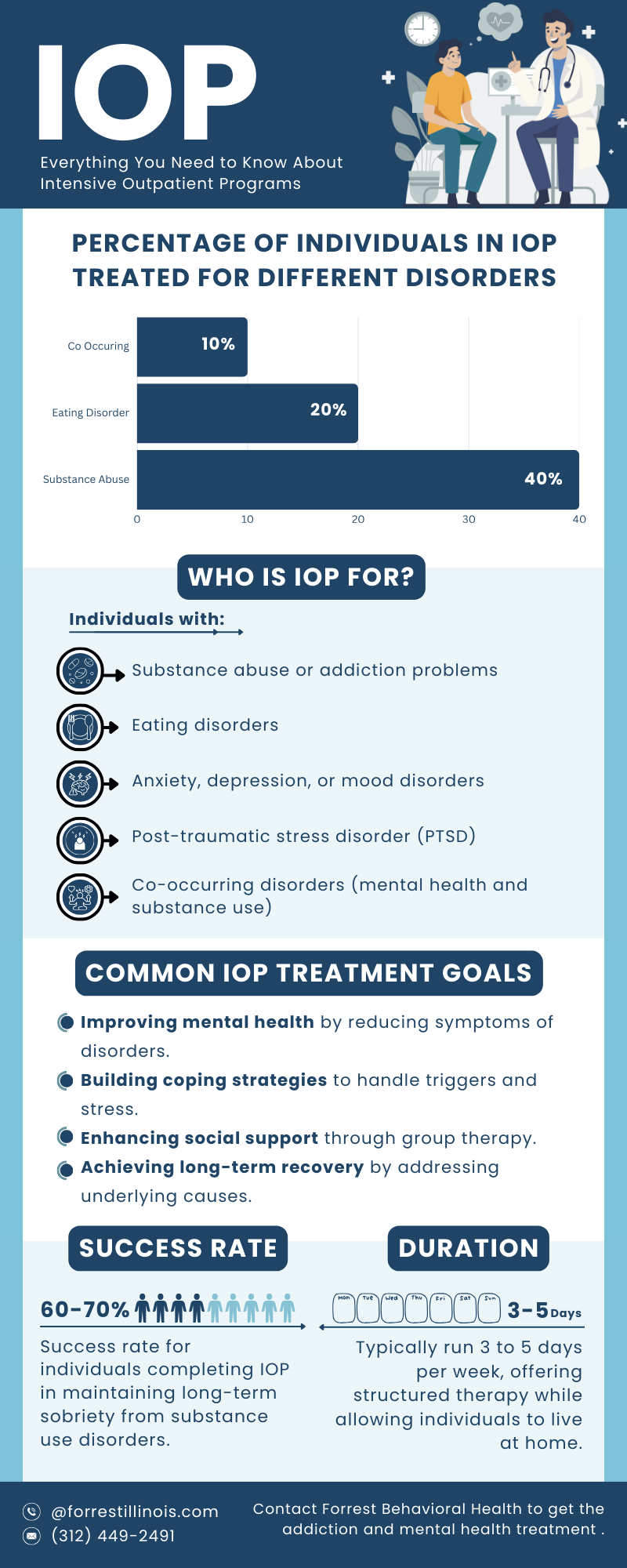
Patients here usually realize that others are suffering from the same issues.
It can be a very reassuring moment.
Research indicates that group treatment is effective in enhancing relationships and decreasing isolation.
STEP 5: Establishing Your Treatment Objectives
Your care team will assist in developing short and long-term objectives.
Examples of these goals might include:
- Improving emotional stability
- Managing panic attacks
- Reducing depressive symptoms
- Establishing good coping skills
As a person recovers, their goals will change.
Treatment is supposed to be flexible and individualized, not rigid.
Illinois Lifestyle Challenges Can Affect Mental Health
Stress can creep into daily life and not be immediately apparent.
Emotional exhaustion can be caused by long hours driving on I-90 or overcrowding on CTA trains.
Winter weather near Willis Tower often keeps people isolated indoors for long periods.
With so much going on around Navy Pier, even busy weekends can be draining with added anxiety.
Structured programs are a factor that helps many adults, because of these pressures.
If You Feel Nervous in The First Session…?
It’s perfectly normal to feel uncomfortable in the first session.
Time and adjustment is necessary for most to be emotionally and socially okay.
You are moving to a new place, and talking about hard emotions.
That takes courage.
There are a number of studies indicating that supportive treatment environments lead to better long-term participation in care.
It typically takes a few weeks to become comfortable.
Why Are IOPs Better Than Weekly Therapy?
For many, weekly therapy is a successful solution.
Others require more of a structured approach of support during difficult times.
IOPs offer multiple therapy sessions per week, while patients maintain their work or family requirements.
It can assist adults in recovering without completely leaving routine duties.
In the hustle and bustle of the Illinois communities, such flexibility is important.
Forrest Illinois Support for First-Time Patients
At Forrest Illinois, the aim of the treatment is to make the patients feel at ease from the start. The team clearly describes the Treatment before sessions even begin.
This eliminates the fear, anxiety, and ambiguity and prepares people emotionally. Programs are based on structure, compassion, and real-world recovery help for real-life scenarios.
Simple Tips before Your First IOP Session
The following are some steps to take in advance:
- Wear comfortable clothes
- If possible, arrive early.
- Take water and/or notebook.
- Keep an open mind when talking:
- Don’t force yourself emotionally
In the first session, the focus will be on getting started and not perfecting at this time.
Your Journey towards Recovery Begins Here
It can be a bit strange to start an IOP, but don’t be afraid to seek additional help.
The majority of initial sessions are spent helping patients feel informed, supported, and emotionally safe.
At Forrest Illinois, patients are guided through each step of treatment.
If anxiety, depression, trauma, or emotional burnout is impacting your daily life, help is available right now.
Today, your first IOP session may seem intimidating, but it may be the start of real recovery.